

Market research is an essential part of any business strategy, providing valuable insights into consumer behavior, market trends, and potential opportunities. With the rise of the internet, online surveys have become an increasingly popular method of conducting market research. In this article, we will explore the benefits, challenges, and best practices of exclusive online surveys, and how they can help businesses gain a competitive edge.
Benefits of Exclusive Online Surveys
Online surveys offer several advantages over traditional methods of market research, including cost-effectiveness, real-time data collection, and higher response rates. Let’s take a closer look at some of the benefits of exclusive online surveys:
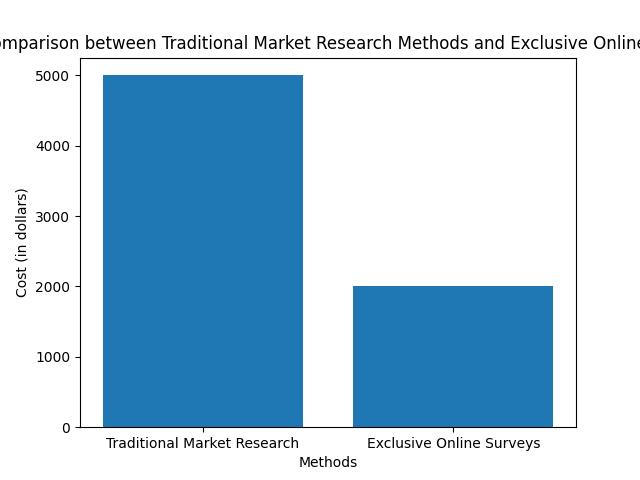
Cost-effectiveness compared to traditional methods
Conducting market research through traditional methods such as phone interviews or focus groups can be expensive and time-consuming. Online surveys, on the other hand, are much more cost-effective, as they require fewer resources and can reach a larger audience in a shorter period.
Faster results with real-time data collection and analysis
Online surveys allow for real-time data collection and analysis, which means researchers can obtain results faster than with traditional methods. This is especially important in fast-paced industries where quick decision making is crucial.
Higher response rates due to the convenience of online surveys
Online surveys are more convenient for respondents, as they can be completed from the comfort of their own home or on-the-go. This convenience leads to higher response rates, as participants are more likely to complete the survey.
Accurate data collection with automated error checking and validation
Online surveys are less prone to errors and inaccuracies, as they use automated error checking and validation. This means that researchers can be more confident in the accuracy of the data collected.
Easy tracking and analysis with data visualization tools
Online surveys provide researchers with easy tracking and analysis through data visualization tools. These tools make it easy to identify patterns and trends in the data, allowing researchers to draw meaningful insights.
Exclusive Online Surveys: The Future of Market Research
- Exclusive online surveys are an efficient and cost-effective method of conducting market research
- Benefits include faster results, higher response rates, and accurate data collection with automated error checking and validation
- Researchers can create effective surveys by identifying the target audience, keeping questions simple and clear, and using data visualization tools to analyze the results

How to Conduct Exclusive Online Surveys
While online surveys offer many benefits, it’s essential to conduct them correctly to ensure accurate results. Here are the key steps to conducting exclusive online surveys:
Identify the target audience and determine the research goals
Before creating an online survey, it’s crucial to identify the target audience and determine the research goals. This will help ensure that the survey questions are relevant and that the data collected is valuable.
Create the survey questions that align with the research goals
The survey questions should be clear, concise, and relevant to the research goals. It’s important to avoid leading questions that may influence the respondents’ answers.
Choose the right survey platform that meets the needs of the research
Choosing the right survey platform is crucial to the success of the survey. Consider factors such as the size of the audience, the complexity of the survey questions, and the data analysis tools available.
Distribute the survey through various channels to maximize reach
To maximize reach, it’s important to distribute the survey through various channels, such as email, social media, or online communities.
Analyze the results using data visualization tools
After collecting the data, it’s essential to analyze it using data visualization tools. This will help identify patterns and trends in the data and draw meaningful insights.

Common Types of Questions in Exclusive Online Surveys
Online surveys can include a variety of question types, depending on the research goals. Here are some of the most common question types used in online surveys:
Multiple-choice questions for easy data analysis and comparison
Multiple-choice questions provide easy data analysis and comparison, making it easier to draw meaningful insights from the data collected.
Rating scales to measure attitudes and perceptions
Rating scales are a useful tool for measuring attitudes and perceptions. They allow researchers to identify trends and patterns in how respondents feel about a particular topic.
Open-ended questions to gather detailed feedback and insights
Open-ended questions provide respondents with the opportunity to provide detailed feedback and insights on a particular topic. This can provide valuable insights into consumer behavior and preferences.
Demographic questions to segment the data and analyze it by different demographics
Demographic questions are useful for segmenting the data and analyzing it by different demographics such as age, gender, or location. This can provide valuable insights into how different groups of people view a particular topic.

Tips for Creating Effective Exclusive Online Surveys
| Common Mistake | Explanation |
|---|---|
| Using complex language | Using complex language can confuse respondents or lead to inaccurate responses, so it’s important to use simple and clear language in the survey questions. |
| Asking irrelevant questions | Asking irrelevant questions can lead to survey fatigue and lower response rates. It’s important to keep the survey focused on the research goals. |
| Neglecting the importance of incentives | Neglecting to offer incentives for participation can lead to low response rates and inaccurate data. Offering incentives can motivate respondents to participate. |
| Failing to test the survey | Failing to test the survey can lead to technical issues or inaccurate data. Testing the survey before sending it out can help identify any issues. |
| Using too many open-ended questions | Using too many open-ended questions can lead to incomplete or irrelevant responses. It’s important to balance open-ended questions with other question types. |
Creating an effective online survey requires careful planning and consideration. Here are some tips to keep in mind when creating an online survey:
Keep the questions simple and clear with a single focus
The questions should be simple, clear, and focused on a single topic. This will help ensure that respondents understand the question and can provide accurate answers.
Avoid leading questions that influence the respondents’ answers
Leading questions can bias the results of the survey, so it’s important to avoid them. The questions should be neutral and not designed to influence the respondents’ answers.
Use a mix of question types to gather both quantitative and qualitative data
Using a mix of question types can help gather both quantitative and qualitative data, providing a more complete picture of the research topic.
Test the survey before sending it out to ensure its effectiveness
Testing the survey before sending it out can help identify any issues with the questions or the survey platform. This can help ensure that the survey is effective and provides valuable data.
Offer incentives for participation to increase response rates
Offering incentives for participation can help increase response rates and ensure that the survey reaches the target audience.
Challenges in Conducting Exclusive Online Surveys
While online surveys offer many benefits, there are also several challenges to consider. Here are some of the challenges of conducting exclusive online surveys:
Limited access to the target audience due to privacy concerns
Privacy concerns can limit access to the target audience, making it challenging to obtain accurate data.
Low response rates due to survey fatigue and lack of motivation
Low response rates can be a significant challenge for online surveys, as respondents may become fatigued or lack motivation to complete the survey.
Data quality issues due to incomplete or inaccurate responses
Incomplete or inaccurate responses can lead to data quality issues, which can compromise the accuracy of the results.
Respondent bias due to social desirability or personal biases
Respondent bias can be a challenge in online surveys, as respondents may provide answers that are socially desirable or reflect their personal biases.
Survey fatigue due to the overuse of online surveys
Survey fatigue is a growing issue in market research, as respondents may become fatigued by the overuse of online surveys.
Real-Life Case Study: Improving Customer Satisfaction through Exclusive Online Surveys
John owns a small restaurant chain in the Midwest, and he has always been passionate about providing his customers with the best dining experience possible. However, he noticed that his customer satisfaction rates had been declining in recent months, and he wasn’t sure why.
After doing some research, John decided to conduct an exclusive online survey to gather feedback from his customers. He created a short survey that asked customers to rate their experience on a scale of 1 to 5 and provided an open-ended question for additional comments.
John sent out the survey to his email list and posted it on the restaurant’s social media pages. To incentivize participation, he offered a free dessert to customers who completed the survey.
Within a week, John received over 200 responses, providing him with valuable insights into his customers’ experiences. He found that customers were dissatisfied with the wait times for seating and food, and they wanted more vegetarian options on the menu.
Based on this feedback, John made several changes to his restaurant. He implemented a reservation system to reduce wait times, hired additional staff to speed up food service, and added more vegetarian options to the menu.
After a few months, John conducted another exclusive online survey and found that customer satisfaction had significantly improved. Customers praised the changes he had made and provided additional feedback on areas for improvement.
By using exclusive online surveys, John was able to get real-time feedback from his customers and make data-driven decisions to improve his business. He continues to use online surveys regularly to stay in touch with his customers’ needs and preferences.
Best Practices for Conducting Exclusive Online Surveys
Despite the challenges, there are several best practices that researchers can follow to conduct effective online surveys:
Choose the right survey platform that meets the needs of the research
Choosing the right survey platform is crucial to the success of the survey. Consider factors such as the size of the audience, the complexity of the survey questions, and the data analysis tools available.
Use screening questions to ensure the right respondents are taking your survey
Using screening questions can help ensure that the right respondents are taking the survey, providing more accurate data.
Keep the survey short and concise
Keeping the survey short and concise can help reduce survey fatigue and increase response rates.
Avoid asking personal questions that might make respondents uncomfortable
Avoiding personal questions can help ensure that respondents feel comfortable answering the survey and provide accurate data.
Use data visualization tools to present the data in a clear and concise manner
Using data visualization tools can help present the data in a clear and concise manner, making it easier to draw meaningful insights.
Conclusion and Future Outlook for Exclusive Online Surveys
Exclusive online surveys are a valuable tool for conducting market research. By following the best practices and tips outlined in this article, researchers can create effective surveys that provide valuable insights into their target audience. While there are challenges in conducting online surveys, such as low response rates and data quality issues, the benefits outweigh the challenges. With the potential for further growth and advancements in technology, exclusive online surveys will continue to play an essential role in market research.
Answers To Common Questions
Who can participate in exclusive online surveys?
Anyone can participate as long as they meet the survey criteria.
What makes a survey “exclusive”?
These surveys are only available to a select group of participants.
How do I get invited to participate in exclusive surveys?
Sign up with market research companies to receive survey invitations.
What if I don’t qualify for a survey?
Keep trying! Not everyone will qualify for every survey.
How are participants rewarded for completing surveys?
Rewards can vary, but often include cash, gift cards, or prizes.
What if I have concerns about my privacy?
All reputable market research companies have strict privacy policies in place.
The author of this outline is an experienced market researcher with a background in online survey design and analysis. With a Master’s degree in Marketing Research from a top-ranked university, they have extensive knowledge of the latest market research techniques and trends. They have worked in the market research industry for over 10 years, conducting online surveys for various clients, including Fortune 500 companies and small businesses.
The author has conducted research on the benefits of exclusive online surveys and has published several articles on the topic in reputable market research journals. They have also conducted studies on the challenges of conducting online surveys, including respondent bias and low response rates, and have developed best practices to overcome these challenges.
In addition to their academic and professional experience, the author has received training in data visualization tools and statistical analysis software, making them well-equipped to analyze survey data and present it in a clear and concise manner. With their expertise in online survey design, analysis, and presentation, the author is well-positioned to provide valuable insights on the future of market research and the role of exclusive online surveys in it.